
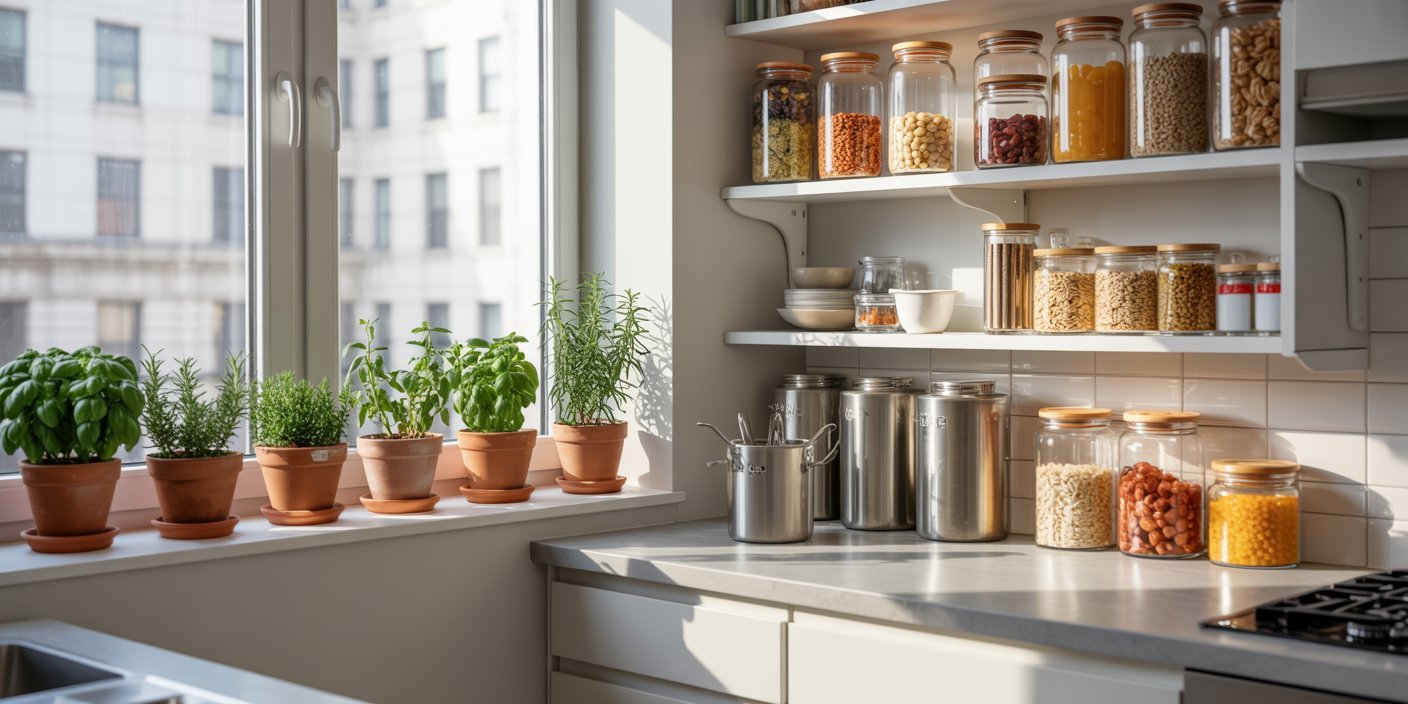
Living in the city doesn’t exactly scream “self-sufficient.” For years,
I thought independence meant owning land, raising chickens, and having a massive garden somewhere far away from traffic and concrete.
That dream is still there, but real life happened first.
What surprised me most is how much we’ve been able to change our lifestyle without leaving the city at all.

Little by little, our family and even a few close friends started shifting how we eat, shop, fix things, and prepare for everyday disruptions.
Self-sufficiency didn’t arrive all at once. It grew quietly through habits that made life simpler, cheaper, and more grounded.
If you live in an apartment or a small urban home and want more control over your food, resources, and daily needs, this guide is for you.
These are the realistic, city-friendly ways we’re building self-sufficiency right where we are.
1. We Treat Every Small Space Like Productive Land
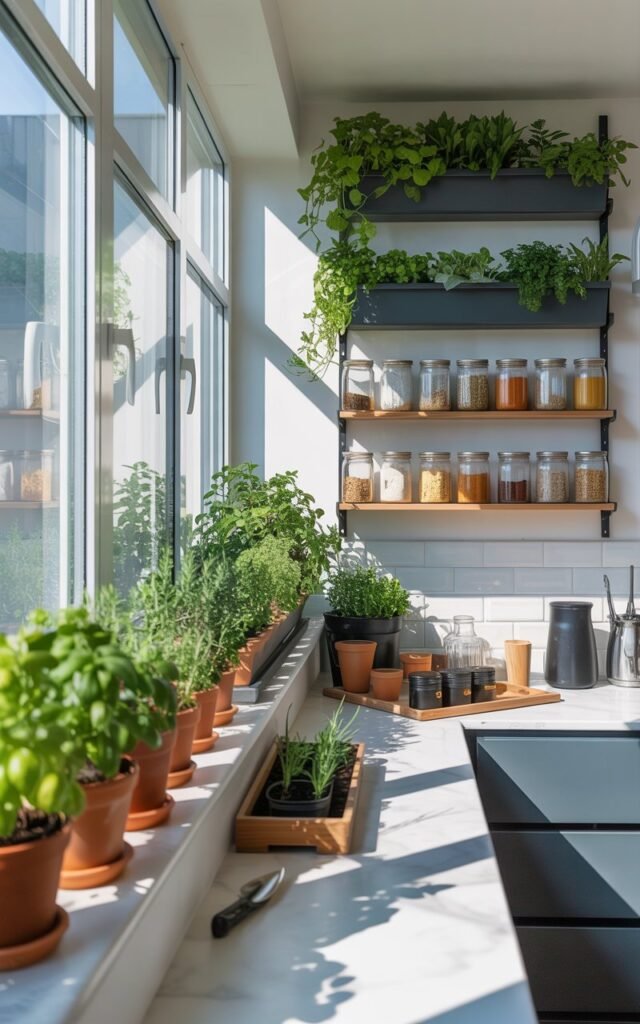
One of the first mindset shifts we made was realizing that food doesn’t need a backyard to grow.
Our windowsills, balcony corners, and even unused shelves became productive spaces.
We started small with herbs. Basil, mint, parsley, and green onions were forgiving and kept growing back.
Over time, we added leafy greens in shallow containers and experimented with compact vegetables in deeper pots.
Even friends who said they had “no space” found they could grow something once they stopped thinking in terms of gardens and started thinking in terms of surfaces, light, and airflow.
Growing even a portion of our food made us more aware of seasons, waste, and how much effort food really takes.
2. We Focus on Foods That Multiply, Not Just Grow
Instead of chasing big harvests, we leaned into foods that regenerate quickly or stretch further.
Sprouts and microgreens became a staple for us.
They grow fast, require minimal space, and add nutrients to almost any meal.
A single jar of sprouts gives days of fresh food with almost no effort.
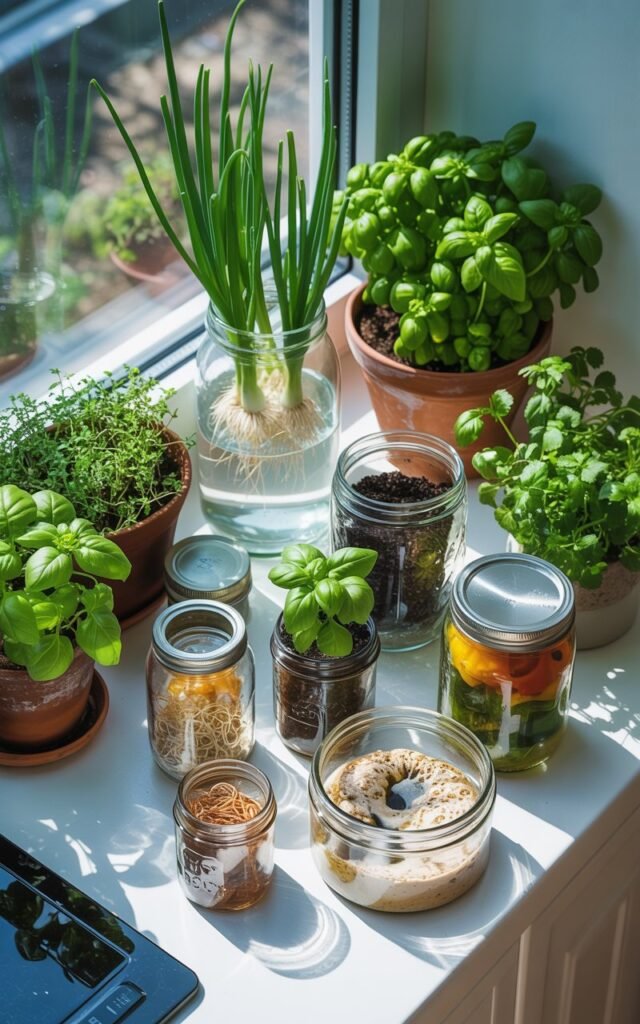
We also learned to regrow certain vegetables from scraps.
Green onions, celery bases, and herbs rooted easily in water before being transferred to soil.
It wasn’t about perfection. It was about building resilience into everyday meals.
3. Our Kitchen Became a Storage System, Not Just a Place to Cook
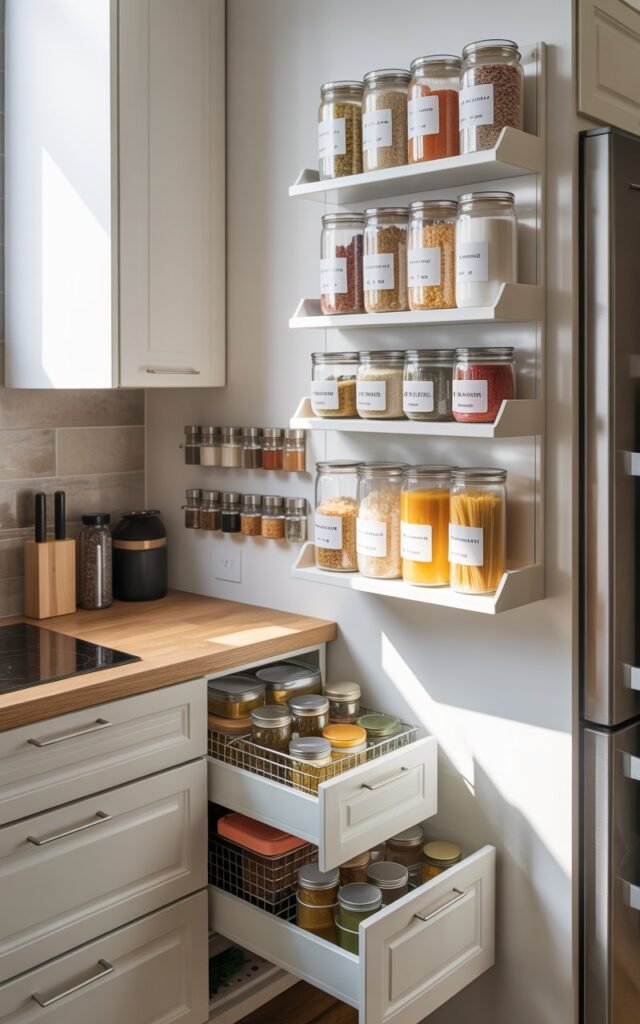
Self-sufficiency really took off once we learned how to store food properly.
We didn’t jump straight into advanced canning.
We started with what felt manageable.
Freezer meals changed everything for our household.
Soups, sauces, cooked grains, and chopped vegetables meant fewer emergency grocery trips and less reliance on packaged foods.
Eventually, we added simple preservation methods like quick pickling and dehydrating herbs.
Nothing fancy. Just enough to make food last longer and reduce waste.
4. We Stopped Buying Convenience and Started Making Staples
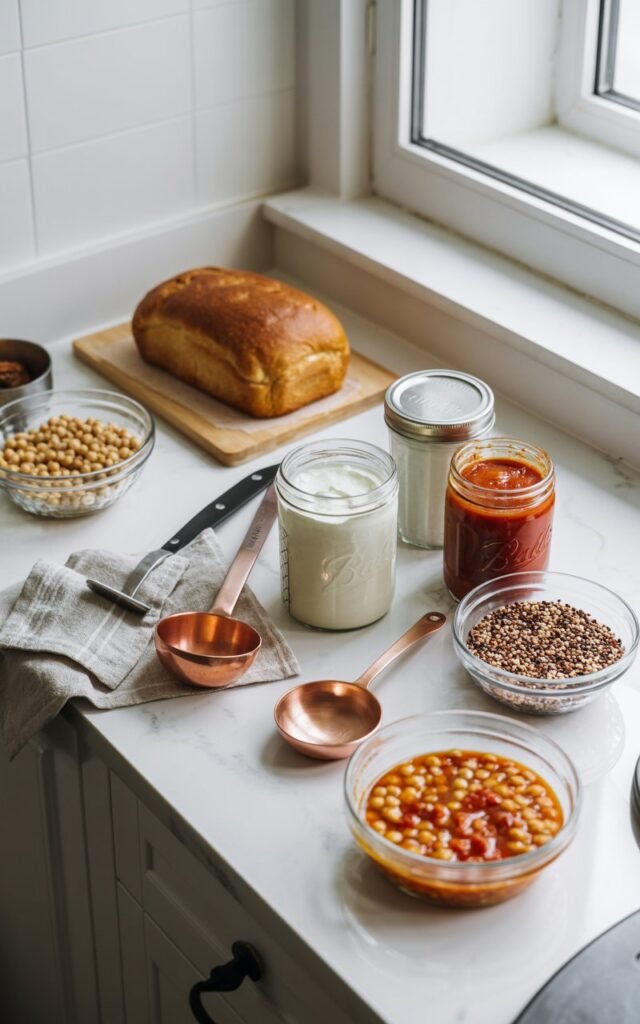
One habit that made a huge difference was identifying which grocery items we bought repeatedly and learning how to make them ourselves.
Bread, broth, salad dressings, and basic condiments were easier than we expected.
Making these at home reduced packaging, saved money, and gave us more control over ingredients.
Even friends who weren’t interested in “homesteading” found themselves adopting these habits because they simply made sense.
5. We Learned to Fix Before We Replaced
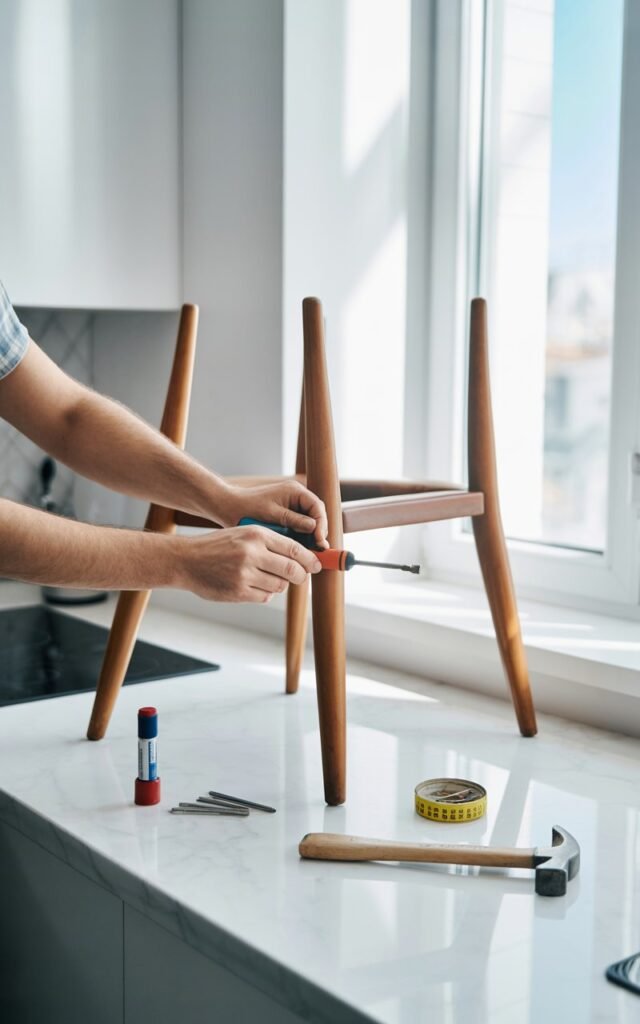
Self-sufficiency isn’t only about food.
It’s also about refusing to throw things away just because they’re slightly broken.
We started with basic repairs.
Sewing buttons, patching small tears, fixing loose handles, unclogging drains without chemicals.
These skills didn’t require special tools, just patience and practice.
Every repair built confidence.
Over time, we stopped seeing broken items as trash and started seeing them as temporary problems with solutions.
6. We Created a Simple Energy Backup Instead of Hoping for the Best

City living can make power feel guaranteed, until it’s not.
A single outage showed us how unprepared we were.
Instead of going extreme, we built a small backup plan.
Rechargeable battery banks, solar phone chargers, and lanterns gave us peace of mind.
We learned how to cook simple meals without electricity and kept lighting options that didn’t rely on the grid.
The goal wasn’t off-grid living. It was not feeling helpless when systems failed temporarily.
7. We Became More Intentional With Water Use
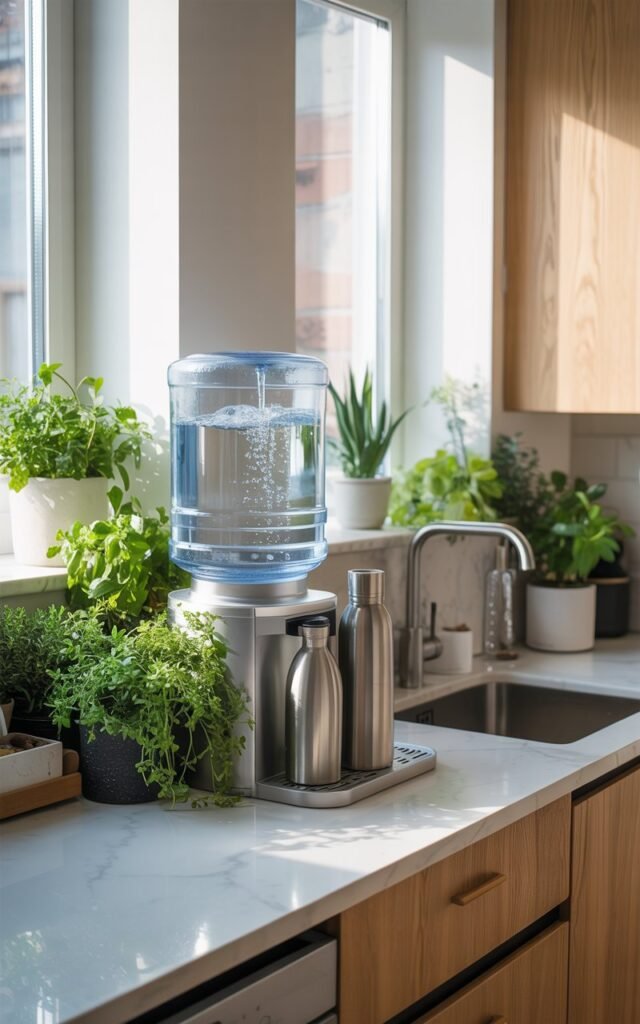
Water was something we never thought much about until we started paying attention.
Small changes added up quickly.
We reduced waste by reusing water where possible, being mindful during cooking, and fixing leaks immediately.
For plants, we reused rinse water from vegetables.
We also looked into basic water filtration so we weren’t entirely dependent on bottled water or municipal systems.
These steps didn’t make us independent from city water, but they made us more resilient.
8. We Started Trading Skills Instead of Buying Solutions

One unexpected benefit of pursuing self-sufficiency was community.
As we learned new skills, we realized others had skills we didn’t.
Friends traded baked goods for sewing help.
Neighbors swapped produce for homemade cleaners.
Advice became a form of currency.
Self-sufficiency doesn’t mean isolation.
In many ways, it strengthened our relationships and reduced our reliance on corporations by increasing reliance on people.
9. We Reintroduced Traditional Skills Into Modern Life
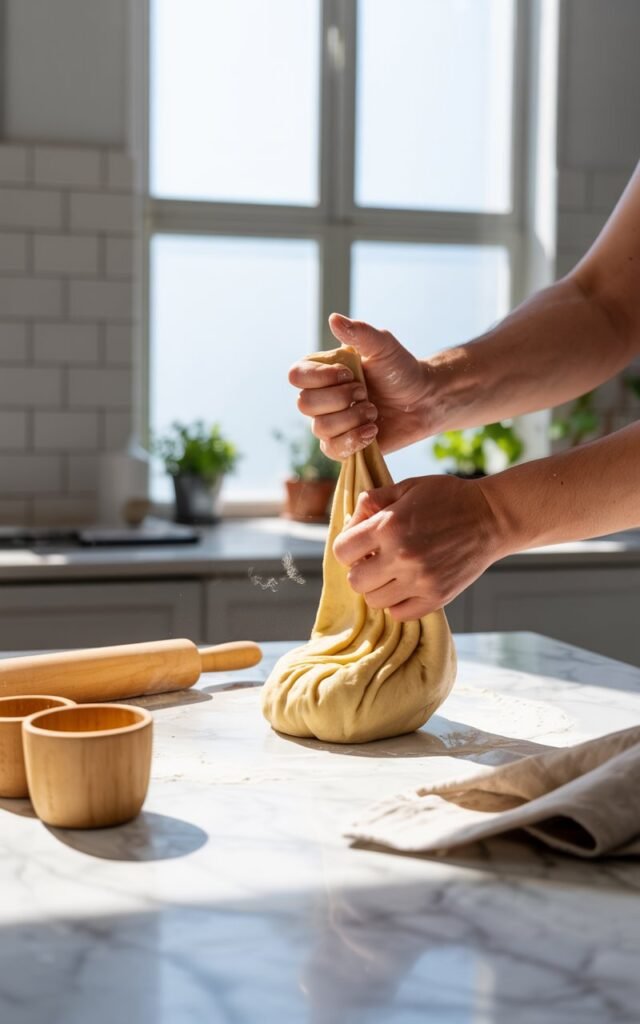
Some skills feel old-fashioned until you need them.
Cooking from scratch, mending clothes, preserving food, and making basic household products all became part of our routine.
These practices slowed life down in a good way.
They connected us to generations before us who lived with fewer conveniences but more awareness.
Even our kids and younger family members became curious once they saw how practical these skills were.
10. We Took Control of Money as a Self-Sufficiency Tool

Financial independence is part of self-sufficiency, especially in a city.
We started tracking spending, reducing impulse purchases, and prioritizing durability over trends.
Buying less but better meant fewer replacements.
Learning skills meant fewer paid services. Preparing food at home reduced expenses significantly.
Every dollar saved gave us more freedom and less stress.
Why Urban Self-Sufficiency Is Worth It
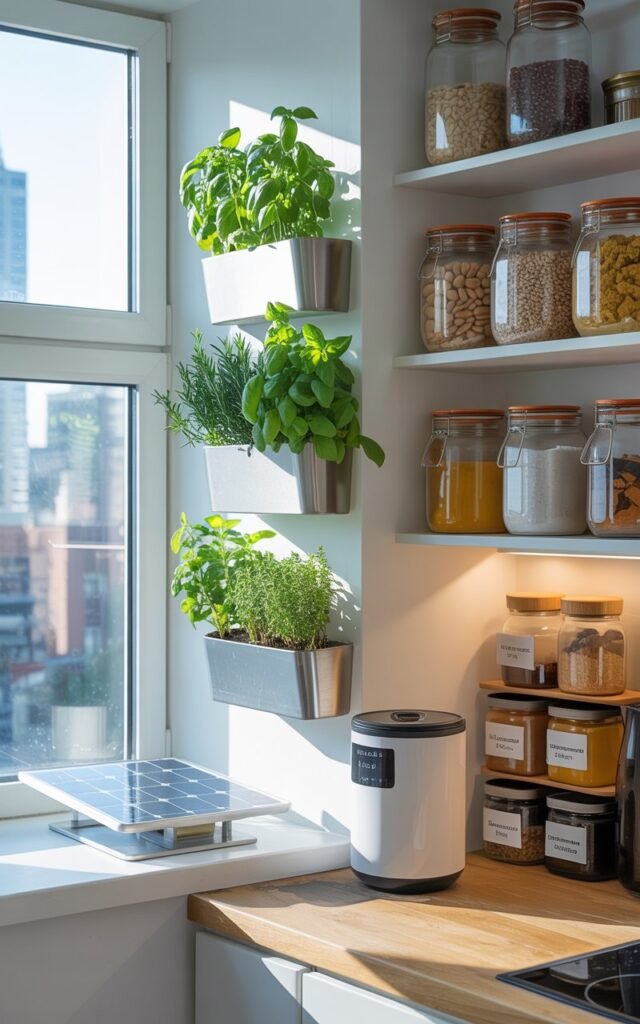
Living in the city doesn’t disqualify anyone from a self-sufficient lifestyle. In many ways, it makes it more necessary.
We didn’t change everything overnight. We didn’t aim for perfection.
We simply chose progress.
Self-sufficiency became less about escaping modern life and more about participating in it on our own terms.
Whether you live in a studio apartment or a small urban home, there’s always something you can grow, fix, make, or learn.
And once you start, it’s hard to stop.