

Planning a new year used to overwhelm me. Every December, I would promise myself that next year would be different, but once January hit, life took over and those big plans quietly faded.
One evening, while sitting with my family and talking about everything we wanted to change and improve, it finally clicked for me. The problem was never motivation.
The problem was that I was trying to plan a whole year without slowing down enough to understand what actually mattered to us.
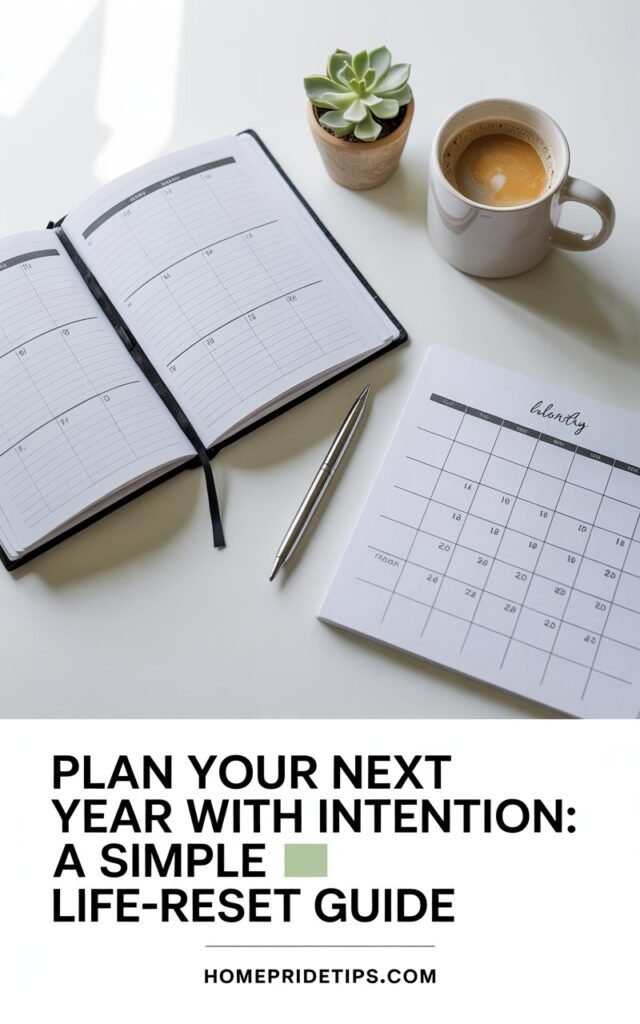
Since then, planning our next year has become something we do with intention, honesty, and a lot more grace. No pressure to be perfect. No unrealistic expectations.
Just a clear way to move forward together. If you’ve ever felt stuck, rushed, or unsure about how to plan a year that actually feels good to live in, this guide is for you.
1. Start by Looking Back Without Judgment

Before planning anything new, I always start by looking back.
Not to criticize myself, but to understand what really happened.
We sit down as a family and talk openly about the past year.
What worked. What felt heavy. What we’d like to do differently.
I usually ask myself a few simple questions and write the answers down:
What moments made me proud? Where did I feel stretched too thin?
What habits helped my life feel calmer? What drained my energy more than it gave back?
This step matters because it sets the tone.
You can’t build a better year if you’re ignoring the lessons from the last one.
2. Decide What Deserves More Space in Your Life

Once I understand the past year, I move on to deciding what deserves more attention going forward.
Instead of trying to fix everything at once, I focus on a few core areas.
For our family, these usually include:
Health and daily routines Family time and relationships Work and income goals Home life and environment Personal growth and learning Rest, joy, and fun
I rate each area honestly, not based on where I think it should be, but where it truly is right now.
This helps me see where small changes could make the biggest difference.
3. Choose Fewer Goals That Actually Matter

This is where I used to get it wrong. I would write long lists of goals and feel excited, but overwhelmed. Now, I choose fewer goals on purpose.
I focus on three main goals for the year. These are the ones that, if improved, would make everything else feel easier. For each goal, I ask:
Why does this matter to our family? What would change if this improved? What would it look like in everyday life?
When goals are connected to real life instead of vague ideas, they become much easier to follow through on.
4. Break the Year Into Simple Seasons
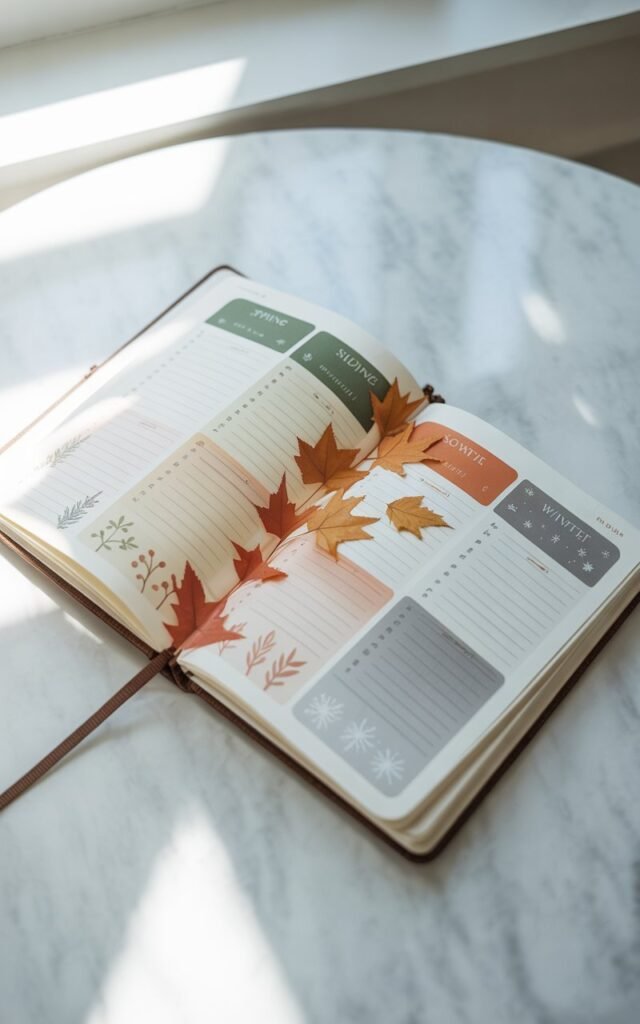
A full year can feel like too much to manage, so I divide it into seasons. Instead of thinking in twelve months, I think in small chapters.
Each season has one main focus. For example:
One season might focus on building healthier routines Another on finances or saving Another on rest, home projects, or family time
This gives us permission to shift priorities without guilt. Life changes, and our plans should be flexible enough to change with it.
5. Design Days That Support Your Goals
Big goals don’t work if your daily life doesn’t support them. This is where planning becomes practical.
I think about what a good day actually looks like for us. Not a perfect day, just a realistic one. I look at:
When we wake up How we spend our mornings Where distractions sneak in When we feel most productive
Then I adjust our routines to support our priorities. Even small changes, like protecting mornings or planning meals ahead, can completely shift how a year feels.
6. Create a Weekly Reset Habit
One of the biggest changes we made was adding a weekly reset. Once a week, we check in.
What worked this week? What didn’t? What needs adjusting?
This habit keeps small problems from becoming big ones.
It also helps us stay connected to our goals without pressure.
Planning isn’t something you do once a year. It’s something you gently return to.
7. Leave Room for Life to Happen
The most important thing I’ve learned is this: a good plan leaves space for real life.
Unexpected changes, slow days, and rest are not failures. They’re part of living.
When we plan our year now, we don’t try to control every outcome.
We focus on direction, not perfection. That mindset alone has made our years feel calmer, more meaningful, and much easier to enjoy.