
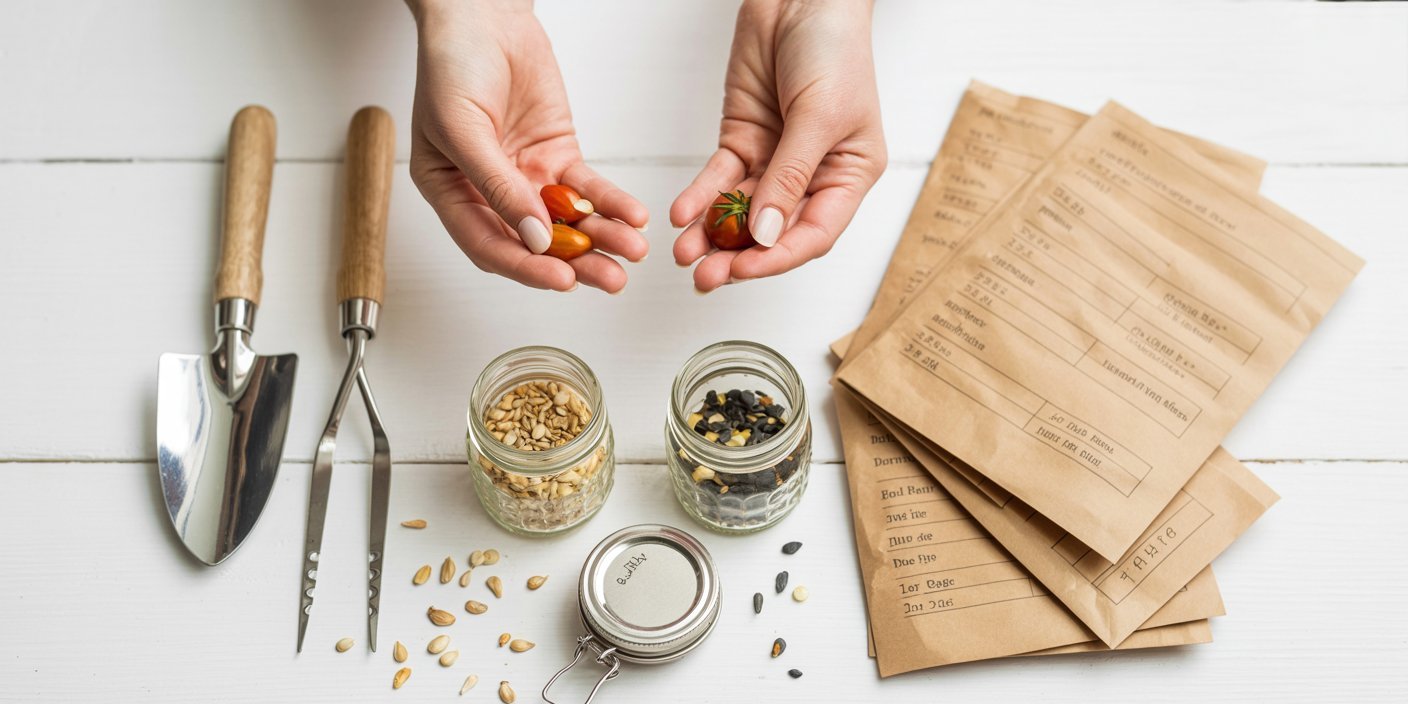
Last summer, I was cleaning out my garden when I noticed a few dried sunflower heads tucked behind the fence.
I didn’t think much of them—until I realized they were packed with seeds! I popped a few in my pocket, and by the next spring, I had tiny sunflower sprouts growing in my backyard.
That moment clicked for me: saving seeds isn’t just practical—it’s magical. It’s like giving your garden a second chance every year.
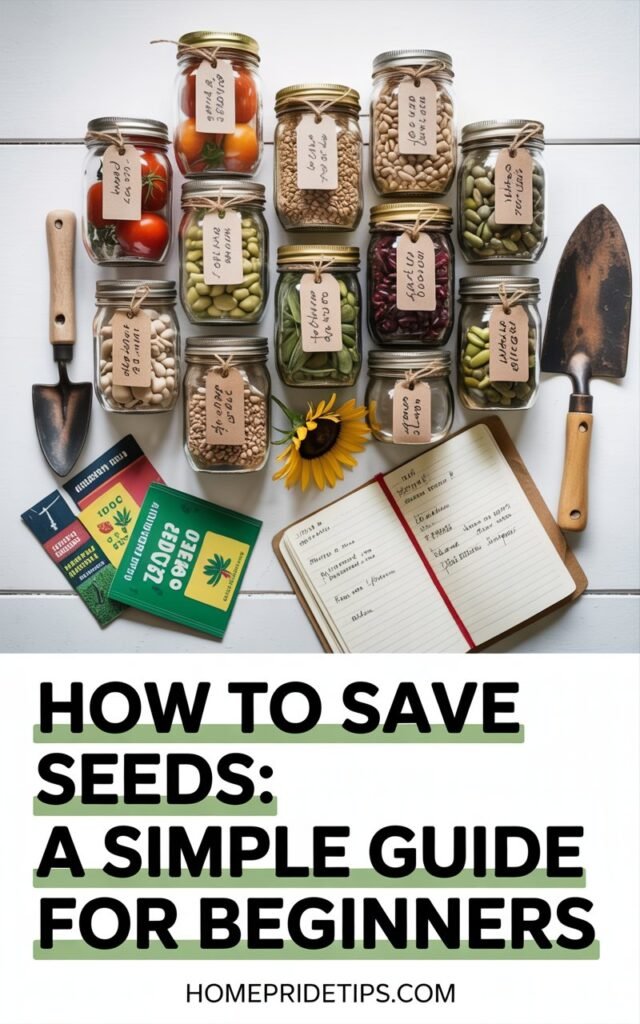
Seed saving is one of those gardening skills that can save money, preserve your favorite plant varieties, and create a garden perfectly adapted to your space.
And the best part? You don’t need fancy tools or years of experience to start.
In this guide, I’ll show you easy ways to save seeds for vegetables, herbs, and flowers—perfect for beginners who want to grow their own garden year after year.
1. Understanding Your Plants: The Key to Success
Before you start collecting seeds, it helps to know a little about how plants reproduce. Understanding this makes saving seeds way easier.
- Self-Pollinating Plants: These plants can make seeds on their own. Perfect for beginners because the seeds grow true to the parent plant. Examples: lettuce, peas, tomatoes.
- Open-Pollinated Plants: These rely on insects, wind, or other plants to pollinate. They’ll grow true if not cross-pollinated. Examples: squash, cucumbers, melons. Tip: isolate varieties if you want pure seeds.
- Hybrid Plants: Seeds from hybrids usually won’t grow true to type, so skip these if you want reliable results.
- Heirloom Varieties: Open-pollinated plants passed down for decades. Seeds from heirlooms are stable and predictable—perfect for home gardeners.
Pro Tip: Cross-pollination affects the next generation, not the current harvest.
That means you can enjoy your fruits this season without worry—but think ahead if you’re saving seeds.
2. Pick the Healthiest Plants
Not all plants are worth saving seeds from. To build a strong, productive garden, choose seeds from:
- Healthy, vigorous plants
- Plants with excellent flavor or appearance
- Crops that produced well in your garden
By selecting the best, you’re ensuring your garden improves year after year. Think of it as passing on the best traits to the next generation.
3. Let Seeds Fully Mature
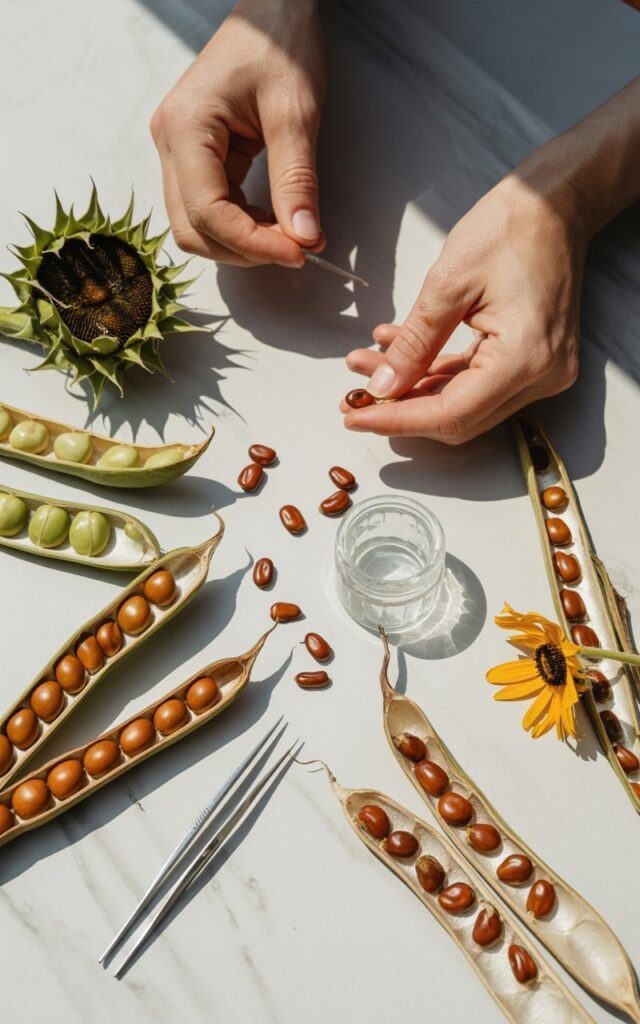
Seeds need time to ripen fully before they’re harvested. If you pick them too early, they may not sprout. Here’s how to know when your seeds are ready:
- Tomatoes: Let them ripen on the vine.
- Peppers: Wait until pods turn deep in color and start to dry.
- Beans & Peas: Allow pods to dry completely on the plant.
- Sunflowers & Marigolds: Let heads turn brown and dry before collecting.
Patience pays off. Mature seeds are stronger, more likely to germinate, and will produce healthy plants.
4. Wet vs. Dry Seeds: What You Need to Know
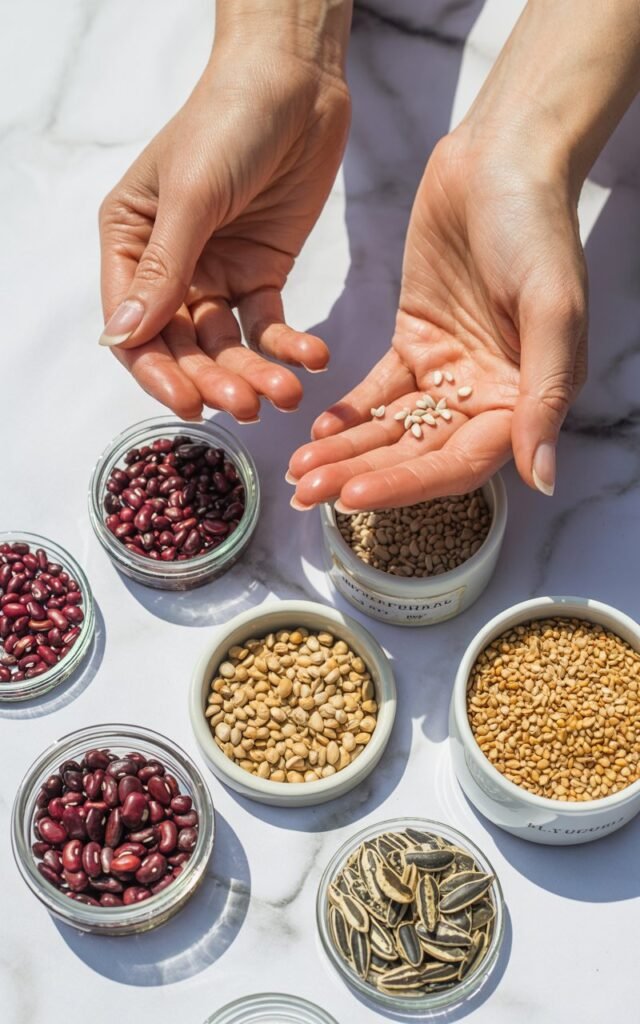
Seeds fall into two main categories: wet (from fleshy fruits) or dry (from pods or flowers).
Wet Seeds (Tomatoes, Cucumbers, Melons)
These seeds are coated in a gel that prevents germination. Here’s how to save them:
- Scoop seeds from fully ripe fruit into a jar.
- Add a little water and let them ferment 2–4 days at room temperature, stirring daily.
- Good seeds sink; remove pulp and rinse.
- Spread seeds on a paper towel or mesh screen to dry completely (1–2 days).
Fermentation also helps prevent disease in storage—so it’s worth the effort.
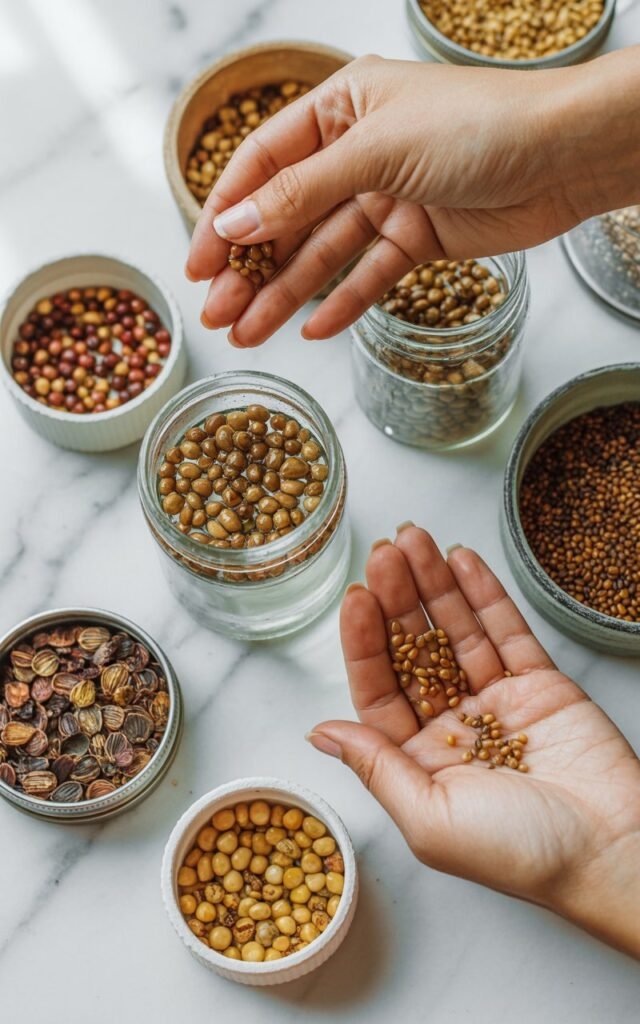
Dry Seeds (Carrots, Lettuce, Sunflowers, Herbs)
Dry seeds come from plants that naturally produce pods or seed heads. Steps:
- Let seed heads dry fully on the plant.
- Harvest into a paper bag when brittle.
- Shake or crumble pods to release seeds.
- Cure seeds another week in a dry, cool place before storing.
5. Storing Seeds Properly
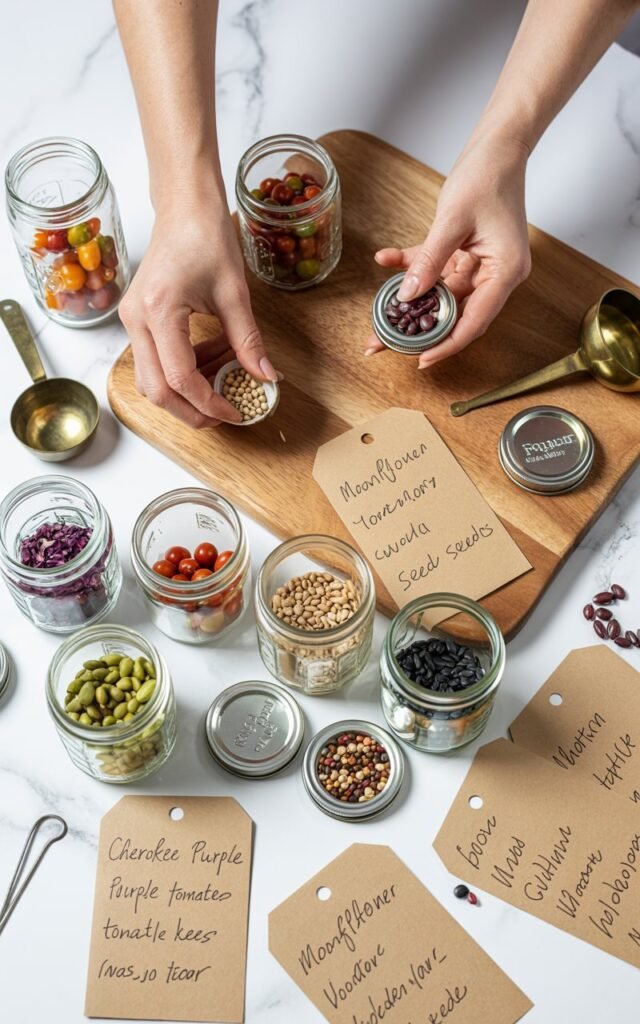
Once your seeds are dry, proper storage ensures they remain viable.
- Use airtight jars or containers.
- Label with plant name and year.
- Store in a cool, dark, dry place.
- Most seeds last 1–5 years depending on the type.
Extra Tip: Add a silica gel packet or a few grains of rice to absorb moisture and keep seeds safe.
6. Share Your Seeds
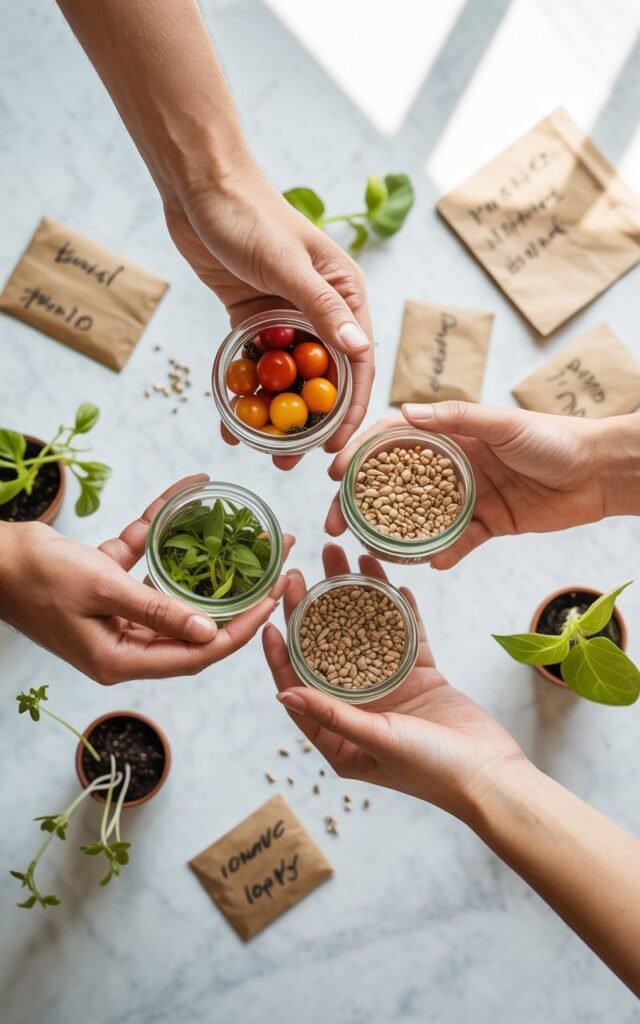
Seed saving doesn’t have to be a solo activity. Sharing seeds with friends, family, or gardening groups spreads diversity and keeps local varieties alive.
- Join local seed swaps or online groups.
- Gift seeds to fellow gardeners.
- Exchange heirloom varieties to help preserve them.
Not only does sharing build community, but it’s also a fun way to discover new plant varieties.
7. Avoid Common Seed-Saving Mistakes
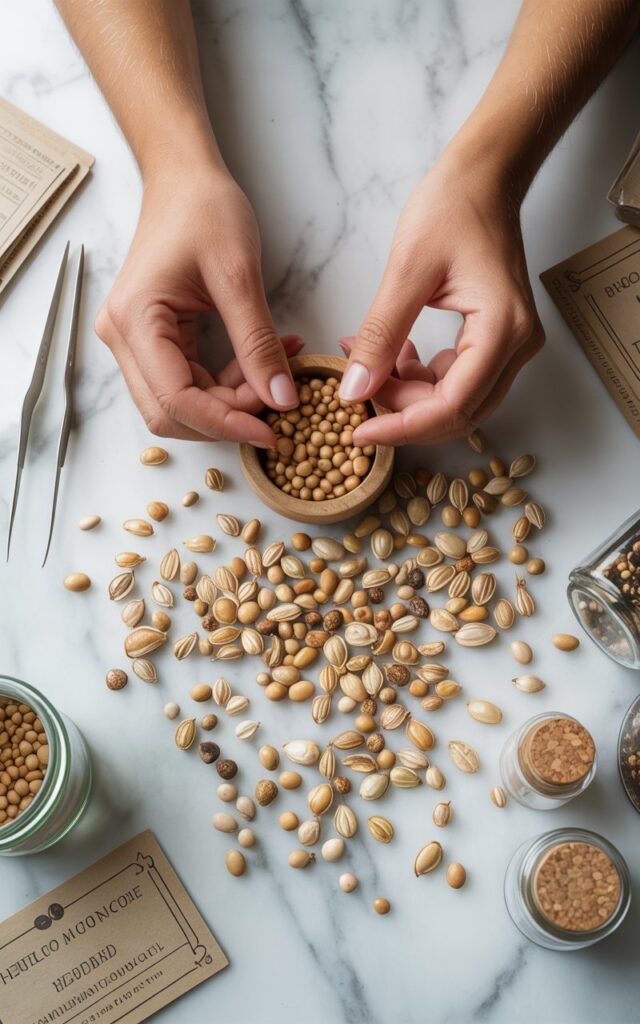
Even though seed saving is simple, beginners often stumble in a few areas:
- Harvesting seeds too early
- Saving seeds from unhealthy or diseased plants
- Ignoring cross-pollination with open-pollinated crops
- Not drying seeds thoroughly before storing
Follow these tips, and you’ll have a thriving, self-sustaining garden year after year.
Final Thoughts
Seed saving is one of the most empowering gardening skills.
It’s free, sustainable, and gives you the chance to grow plants perfectly suited to your garden.
Start with a few favorite plants and watch your seeds sprout next season.
It’s rewarding, satisfying, and a little magical.
Your garden becomes more than just a place to grow food—it becomes a space where you grow knowledge, patience, and a legacy of self-sufficiency.
So grab a bag, start collecting, and let your garden flourish year after year!